
Excessive barking is one of the most frustrating behavior problems dog owners face. Whether your dog barks at visitors, passing cars, other dogs, or every sound outside the window, constant barking can quickly become stressful for everyone involved.
If you’ve been searching for how to train a dog to stop barking excessively, you’re not alone. Many dog owners struggle with this issue, but the good news is that excessive barking can often be reduced with the right training techniques, consistency, and mental stimulation.
In this guide, you’ll learn how to train a dog to stop barking excessively, understand why dogs bark, and discover practical training methods that encourage calmer behavior.

Why Dogs Bark Excessively
Before learning how to train a dog to stop barking excessively, it’s important to understand why your dog is barking in the first place.
Barking is a natural form of communication. Dogs bark to express excitement, fear, boredom, alertness, or frustration.
Common causes include:
- Boredom
- Anxiety
- Attention-seeking behavior
- Lack of exercise
- Territorial instincts
- Separation anxiety
- Fear of unfamiliar noises
- Lack of mental stimulation
According to the ASPCA, identifying the reason behind the barking is one of the most important steps in solving the problem.
Understanding the Root Cause
Every barking problem has a trigger.
For example:
- A dog barking at strangers may be protecting its territory.
- A dog barking when left alone may be experiencing separation anxiety.
- A dog barking all day at home may simply be bored.
When you understand the cause, training becomes much more effective.
How to Train a Dog to Stop Barking Excessively by Rewarding Calm Behavior
One of the most effective methods for how to train a dog to stop barking excessively is rewarding the behavior you want instead of focusing only on the behavior you dislike.
Many owners accidentally reward barking by:
- Giving attention
- Picking up the dog
- Offering treats to stop the noise
Instead, wait for a moment of silence.
Steps to Follow
Step 1
Allow your dog to bark briefly.
Step 2
Wait until they stop.
Step 3
Immediately reward the quiet behavior.
Step 4
Repeat consistently.
Over time, your dog learns that calm behavior receives rewards.
How to Train a Dog to Stop Barking Excessively Using the Quiet Command
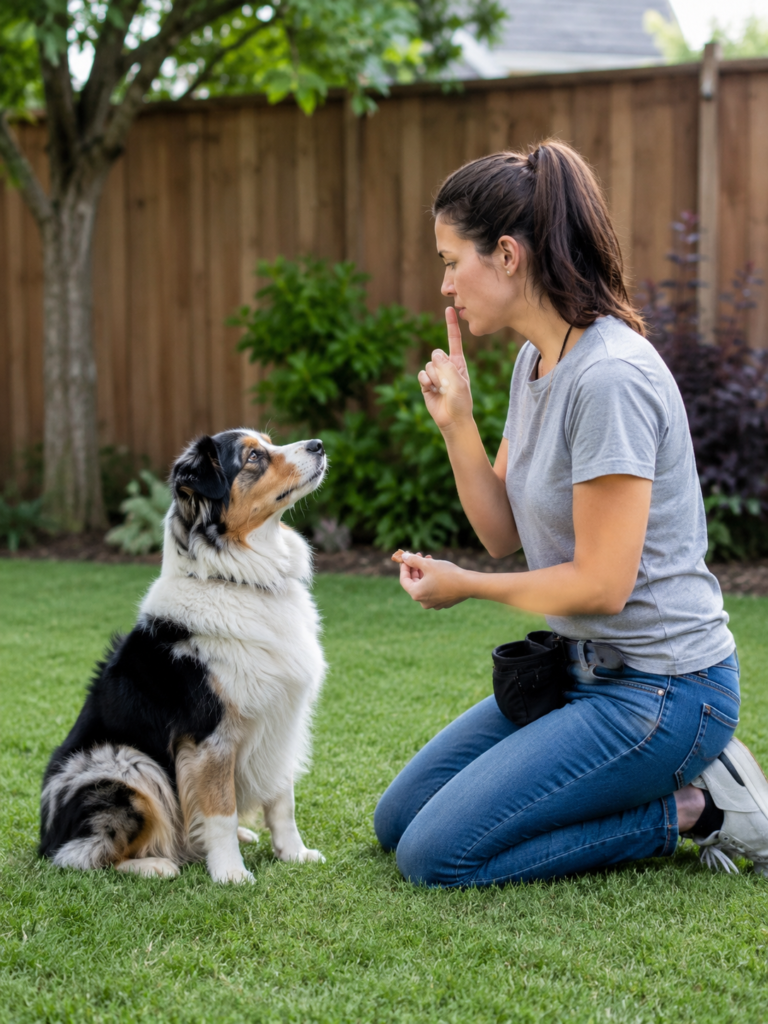
Teaching the “Quiet” command can significantly improve barking control.
Step-by-Step Process
Allow Barking
Trigger a situation that causes your dog to bark.
Introduce the Command
Say “Quiet” in a calm voice.
Reward Silence
The moment your dog stops barking, reward them.
Practice Daily
Consistency is essential.
Most dogs begin understanding the command after repeated practice sessions.
Discover the Brain Training System Thousands of Dog Owners Are Using
Teaching the “Quiet” command is an excellent first step, but many dog owners discover that lasting behavior improvements happen faster when training goes beyond basic obedience.
A structured brain training program can help your dog stay mentally engaged while developing important skills such as focus, impulse control, confidence, and better decision-making.
Why Dog Owners Love Brain Training
✅ Helps reduce boredom-related barking
✅ Encourages calmer behavior at home
✅ Improves focus and responsiveness
✅ Builds confidence through positive challenges
✅ Strengthens the bond between you and your dog
Instead of relying on random training tips, a step-by-step brain training system gives you a proven roadmap to help your dog develop better habits and stay mentally stimulated.
If you’re looking for a more complete approach to behavior improvement, explore the Brain Training for Dogs program and discover how mental exercises can transform your dog’s daily behavior.
👉 Learn More About Brain Training for Dogs
Increase Physical Exercise to Reduce Barking
Many owners underestimate the impact of exercise.
A tired dog is often a quieter dog.
Daily activities such as:
- Walking
- Running
- Fetch
- Hiking
- Swimming
can help burn excess energy that might otherwise be expressed through barking.
Exercise Recommendations
Small Breeds
30–45 minutes daily
Medium Breeds
45–60 minutes daily
High-Energy Breeds
60–120 minutes daily
Exercise alone won’t solve every barking problem, but it often plays an important role.
How to Train a Dog to Stop Barking Excessively With Brain Games
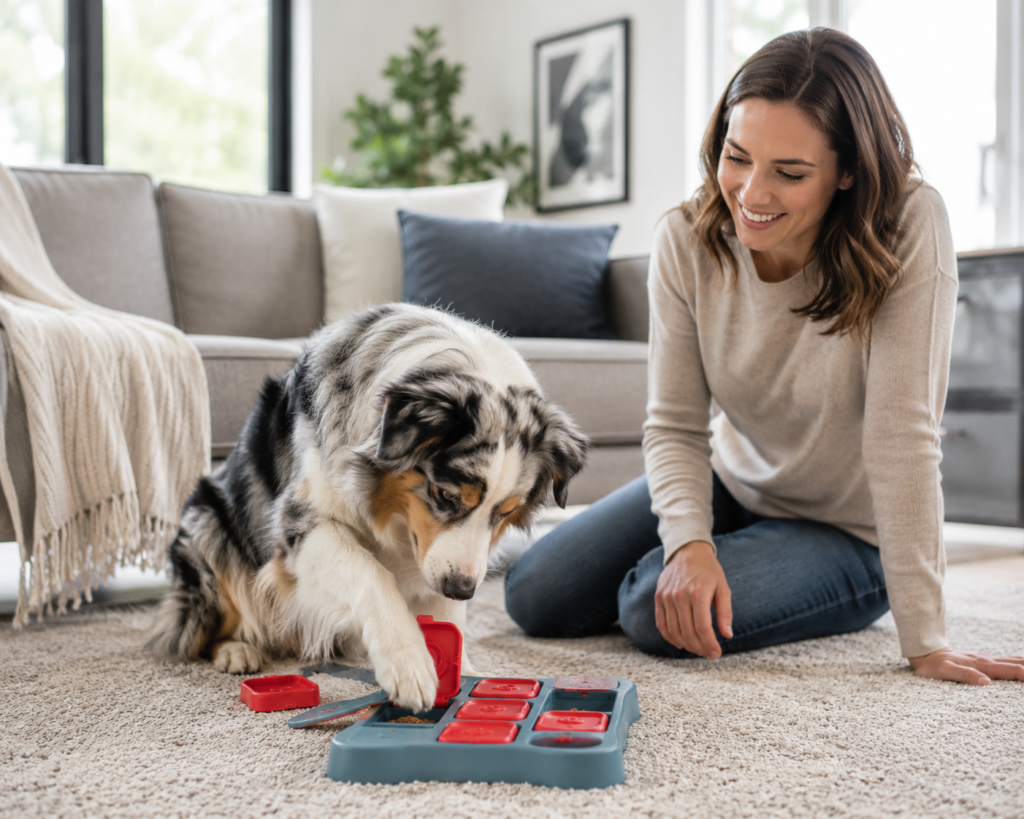
One of the most overlooked solutions for excessive barking is mental stimulation.
Dogs need mental exercise just as much as physical exercise.
When dogs become bored, they often create their own entertainment—and barking is a common result.
Brain Game #1: Treasure Hunt
Hide treats around your home.
Encourage your dog to find them.
Brain Game #2: Muffin Tin Puzzle
Hide treats beneath tennis balls inside a muffin tin.
Brain Game #3: Hide and Seek
Hide somewhere in the house and ask your dog to find you.
Brain Game #4: Find the Toy
Hide a favorite toy and encourage your dog to search for it.
Brain Game #5: Name Recognition
Teach your dog to identify toys by name.
These games encourage focus, confidence, and problem-solving skills.
Want More Advanced Brain Games for Your Dog?
The brain games above are a great starting point for reducing boredom and keeping your dog mentally engaged. Many dog owners notice improvements in focus, confidence, and behavior after adding these activities to their daily routine.
However, if your dog still struggles with excessive barking, hyperactivity, poor focus, or other behavior issues, a more structured approach may be beneficial.
A complete brain training program can help your dog progress beyond basic games by introducing step-by-step mental exercises designed to develop:
Benefits of Advanced Brain Training
✅ Better focus and attention
✅ Improved obedience and responsiveness
✅ Stronger impulse control
✅ Enhanced problem-solving abilities
✅ Reduced boredom-related barking
✅ Increased confidence in new situations
Rather than constantly searching for new training ideas, you’ll have access to a proven system that guides your dog’s mental development through progressively challenging activities.
Many dog owners find that structured brain training helps create lasting behavior improvements while making training more enjoyable for both the dog and the owner.
👉 See the Complete Training Program
Remove Barking Triggers Whenever Possible
Another important step in how to train a dog to stop barking excessively is managing triggers.
Common Triggers
- People walking past windows
- Delivery drivers
- Other dogs
- Loud noises
Solutions
Block Visual Triggers
Close curtains or use privacy film.
Manage Outdoor Access
Limit access to areas where barking frequently occurs.
Redirect Attention
Use toys or commands to shift focus.
Managing triggers can reduce opportunities for unwanted barking.
Why Brain Training Works Better Than Punishment
Many dog owners make the mistake of relying on punishment.
Unfortunately, punishment often addresses the symptom rather than the cause.
Brain training takes a different approach.
Instead of suppressing behavior, it helps dogs:
- Focus better
- Think independently
- Build confidence
- Develop impulse control
This is why many professional trainers prefer mental stimulation and positive reinforcement methods.
You can learn more about positive reinforcement training through resources provided by the American Kennel Club.
The Complete Brain Training Program for Dogs
By now, you’ve learned that excessive barking is often caused by boredom, frustration, lack of mental stimulation, or poor impulse control. While basic obedience training and simple brain games can help, many dog owners achieve faster and more consistent results when they follow a structured training system.
The Brain Training for Dogs program is designed to challenge your dog’s mind through fun, step-by-step exercises that improve focus, obedience, confidence, and behavior.
What Makes Brain Training Different?
Unlike traditional training methods that focus only on commands, brain training encourages dogs to think, solve problems, and develop better decision-making skills.
Benefits of a Structured Brain Training Program
✅ Reduce excessive barking and attention-seeking behaviors
✅ Improve focus and responsiveness
✅ Build impulse control and patience
✅ Strengthen obedience through positive reinforcement
✅ Keep your dog mentally stimulated and engaged
✅ Create a calmer and more confident companion
Whether you have a puppy, an adult dog, or a senior dog, structured mental exercises can help unlock your dog’s potential while making training more enjoyable.
If you’re ready to go beyond basic training and give your dog a proven system for better behavior, this program is worth exploring.
👉 Get Instant Access to Brain Training for Dogs
Create a Consistent Daily Training Routine
Consistency is one of the biggest factors in successful dog training.
Daily Routine Example
Morning
30-minute walk
Afternoon
Brain game session
Evening
Obedience training practice
Before Bed
Calm relaxation period
Dogs thrive on predictable schedules.
The more consistent you are, the faster results typically appear.

Common Mistakes Dog Owners Make
When learning how to train a dog to stop barking excessively, avoid these common mistakes:
Inconsistency
Changing rules frequently confuses your dog.
Rewarding Barking
Giving attention during barking reinforces the behavior.
Ignoring Mental Stimulation
Physical exercise alone is often not enough.
Expecting Immediate Results
Training takes time and patience.
Progress often happens gradually.
Read this article
How to Stop Excessive Dog Barking Using Brain Training Games
This article explains how excessive dog barking is often caused by boredom, anxiety, loneliness, or lack of mental stimulation rather than disobedience alone. It highlights the importance of brain training games as a positive way to reduce barking by keeping dogs mentally engaged and focused. The guide introduces seven effective activities, including treasure hunts, hide-and-seek, puzzle games, scent work, obstacle courses, and object recognition training. It also discusses common mistakes owners make, such as rewarding barking or relying only on physical exercise. The article emphasizes consistency, mental enrichment, and structured brain training programs to help dogs become calmer, happier, and better behaved.
When to Seek Professional Help
Some barking issues may require additional support.
Consider consulting a professional trainer if your dog:
- Shows aggressive behavior
- Has severe separation anxiety
- Experiences sudden behavior changes
- Cannot be redirected through training
Professional guidance can help identify deeper issues and create a customized training plan.
Ready for a Quieter, Happier Dog?
If you’ve made it this far, you already understand that excessive barking is rarely just a noise problem. In many cases, it’s a sign that a dog needs more mental stimulation, better focus, and a structured outlet for their energy.
While the training methods and brain games in this guide can make a significant difference, many dog owners find that following a complete training system helps them achieve results faster and more consistently.
Imagine Having a Dog That:
✅ Stays calmer around common triggers
✅ Focuses better during training sessions
✅ Responds more reliably to commands
✅ Has fewer boredom-related behavior issues
✅ Enjoys learning new skills and challenges
A structured brain training program can help your dog build these habits through engaging exercises that strengthen focus, confidence, and obedience.
Whether you’re working with a puppy, an adult dog, or a rescue dog, the right mental training can help create lasting behavior improvements and a stronger bond between you and your pet.
Take the next step toward a calmer, more focused companion.
👉 Start Brain Training Your Dog Today
Final Thoughts
If you’ve been wondering how to train a dog to stop barking excessively, remember that barking is often a symptom of boredom, anxiety, lack of exercise, or insufficient mental stimulation.
The most effective approach combines:
- Positive reinforcement
- Consistent training
- Physical exercise
- Brain games
- Trigger management
Learning how to train a dog to stop barking excessively isn’t about stopping communication—it’s about teaching your dog when barking is appropriate and helping them feel calmer, more confident, and more engaged.
With patience and consistency, most dogs can learn better habits and become happier companions for years to come.