
Every dog owner dreams of having a well-behaved companion who listens reliably, walks calmly on a leash, and feels confident in different situations. The reality, however, is often very different. Many dogs struggle with excessive barking, leash pulling, jumping on guests, separation anxiety, destructive chewing, or even aggression toward people and other animals.
When these challenges appear, many owners assume they need to spend hundreds or even thousands of dollars on professional trainers. While professional help can be valuable in certain situations, many behavior problems can be improved dramatically through consistent training and a better understanding of canine behavior.
That’s where the best dog training books come in.
A quality dog training book provides structured guidance, practical exercises, and proven techniques that help owners build communication, trust, and obedience at home. Whether you’re raising a new puppy, managing a high-energy working breed, or helping an anxious rescue dog gain confidence, the right book can provide a clear roadmap.
In this guide, we’ll review five highly recommended dog training books covering everything from basic obedience and positive reinforcement to service dog training and behavior rehabilitation.
Why Dog Training Matters More Than Most Owners Realize
Dog training isn’t just about teaching commands like sit, stay, and come.
Effective training helps create:
- Better communication between dog and owner
- Reduced anxiety and stress
- Improved safety around people and pets
- Increased confidence in unfamiliar situations
- Stronger trust and bonding
- Better quality of life for the entire household
Many behavior problems develop because dogs don’t fully understand expectations. Training provides structure and consistency, helping dogs make better choices.
Perhaps most importantly, training is a lifelong process rather than a one-time event. Even highly trained dogs benefit from ongoing practice and mental stimulation.
Common Dog Behavior Problems These Books Can Help Solve
Many owners purchase training books after experiencing one or more of these common issues:
Excessive Barking
Barking is natural, but constant barking can become disruptive. Training helps identify triggers and teaches alternative behaviors.
Leash Pulling
Dogs often pull because they haven’t learned loose-leash walking skills. Proper training creates calmer, more enjoyable walks.
Separation Anxiety
Some dogs become distressed when left alone. Positive reinforcement techniques can gradually build independence and confidence.
Jumping on Visitors
Jumping may seem friendly, but it can become problematic. Consistent training teaches dogs more appropriate greeting behaviors.
Reactivity Toward Other Dogs
Reactive dogs often bark, lunge, or become overly excited around other dogs. Structured training can significantly improve these responses.
Destructive Chewing
Many destructive behaviors stem from boredom, stress, or excess energy. Mental stimulation and training often help reduce these issues.
Quick Comparison Table
| Book | Best For | Skill Level |
| The Practical Positive Dog Training Bible | Anxiety, aggression, reactivity | Beginner–Intermediate |
| Training High Energy Dogs (10 Minutes a Day) | Busy owners of active breeds | Beginner |
| The Practical Service Dog Training Handbook | Service dog training | Beginner–Advanced |
| K9 Behavior Basics Dog Training Guide | First-time dog owners | Beginner |
| Training High-Energy Dogs | Focus and impulse control | Beginner |
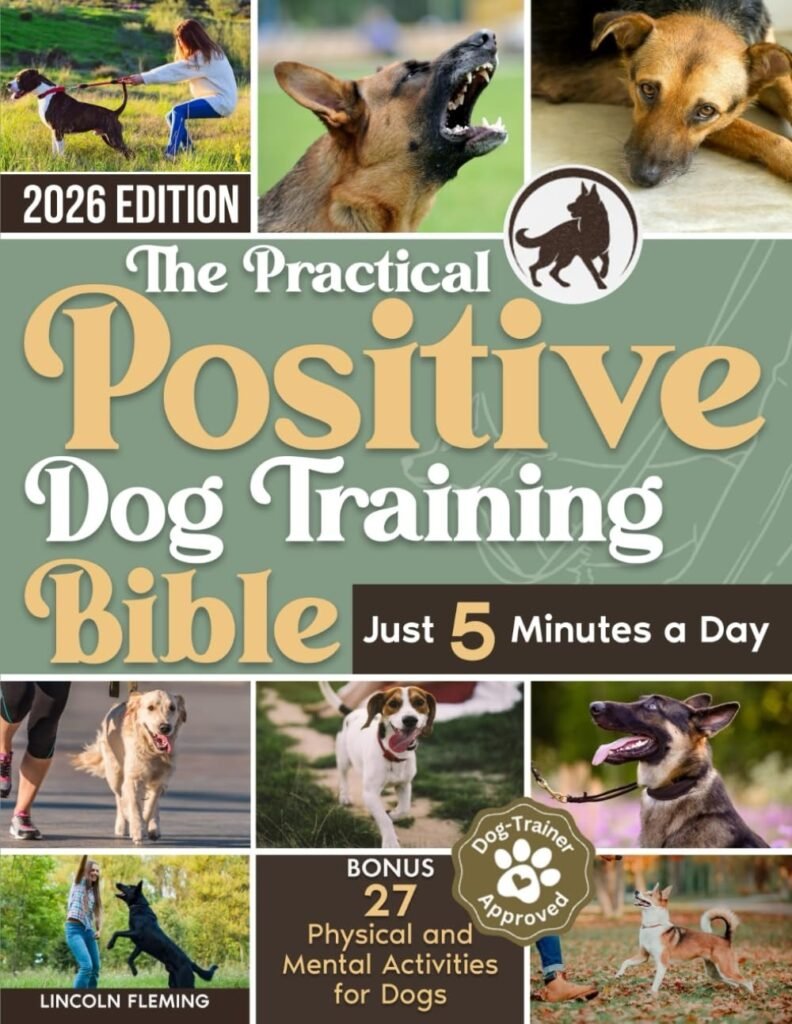
1. The Practical Positive Dog Training Bible
Best For
- Reactive dogs
- Aggressive behavior
- Fearful dogs
- Separation anxiety
This book focuses heavily on positive reinforcement and behavior rehabilitation. Rather than relying on punishment-based methods, it teaches owners how to reshape behavior through trust, consistency, and rewards.
What makes it particularly valuable is its practical approach. The book breaks down complex behavioral issues into manageable training steps that owners can implement immediately.
What You’ll Learn
- Understanding canine body language
- Reducing fear-based reactions
- Building confidence
- Managing aggression safely
- Creating positive behavioral habits
Pros
✔ Positive reinforcement focused
✔ Suitable for beginners
✔ Covers difficult behavior problems
✔ Practical exercises
Cons
✘ Results require consistency
2. Training High Energy Dogs: Transform Active Breeds in 10 Minutes a Day

Best For
- Border Collies
- German Shepherds
- Labrador Retrievers
- Australian Shepherds
High-energy dogs aren’t “bad” dogs. They simply require more mental and physical stimulation than average.
This book addresses one of the biggest challenges owners face: finding enough time for training.
The author provides short daily routines that can fit into even the busiest schedule while still helping dogs improve focus and obedience.
What You’ll Learn
- Daily enrichment activities
- Brain games
- Energy management
- Focus-building exercises
- Impulse control strategies
Pros
✔ Short training sessions
✔ Ideal for busy owners
✔ Easy-to-follow routines
✔ Great mental stimulation ideas
Cons
✘ Less focused on severe behavior issues
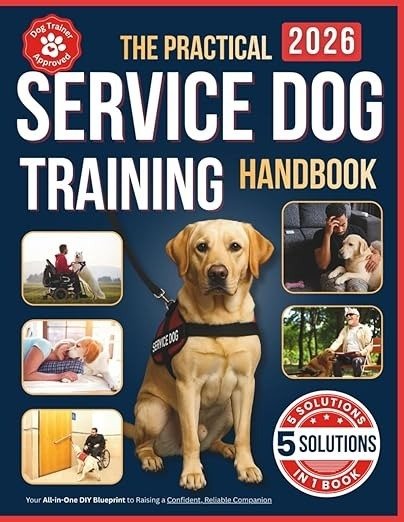
3. The Practical Service Dog Training Handbook
Best For
- Service dog candidates
- Assistance dogs
- Therapy dogs
- Advanced obedience
Professional service dog training can cost thousands of dollars.
This handbook provides a detailed framework for owners who want to train a reliable companion themselves while understanding the standards expected of working dogs.
What You’ll Learn
- Public access skills
- Advanced obedience
- Confidence building
- Socialization techniques
- Reliability training
Pros
✔ Comprehensive guide
✔ Detailed progression plan
✔ Beginner-friendly explanations
✔ Advanced training concepts
Cons
✘ Requires significant dedication
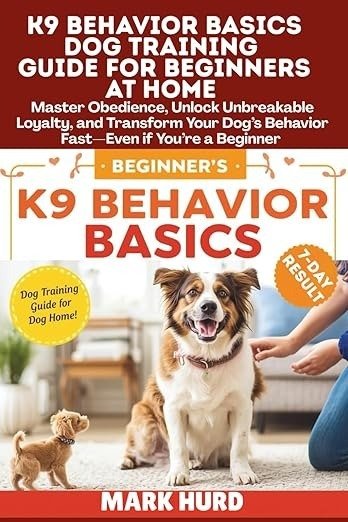
4. K9 Behavior Basics Dog Training Guide for Beginners at Home
Best For
- First-time dog owners
- New puppy parents
- Basic obedience training
If you’re completely new to dog training, this book offers one of the easiest starting points.
The language is straightforward, the exercises are practical, and the focus remains on building a strong relationship through positive reinforcement.
Pros
✔ Easy to understand
✔ Beginner focused
✔ Covers essential obedience skills
✔ Practical home training exercises
Cons
✘ Not designed for advanced behavior modification
5. Training High-Energy Dogs: How to Calm, Focus, and Train Active Breeds

Best For
- Hyperactive dogs
- Focus issues
- Impulse control
- Everyday obedience
Many dogs know commands but struggle to listen when distractions appear.
This book focuses on developing calmness and self-control while improving responsiveness.
The techniques emphasize mental engagement rather than simply exhausting dogs physically.
Pros
✔ Strong focus on impulse control
✔ Practical daily exercises
✔ Useful for energetic breeds
✔ Easy-to-follow methods
Cons
✘ Similar audience to other high-energy dog books
Positive Reinforcement vs Traditional Training Methods
Modern dog training increasingly favors positive reinforcement because it encourages learning through rewards rather than fear.
| Positive Reinforcement | Punishment-Based Training |
| Builds trust | Can create fear |
| Encourages confidence | May increase anxiety |
| Strengthens relationship | Can damage trust |
| Focuses on desired behaviors | Focuses on mistakes |
Most of the books featured in this guide use positive reinforcement principles because they tend to produce more reliable long-term results.
How to Choose the Right Dog Training Book
For Puppies
Choose beginner-friendly guides that emphasize socialization and basic obedience.
For Aggressive or Reactive Dogs
Look for books focused on behavior modification and rehabilitation.
For Active Breeds
Select books that emphasize enrichment, brain games, and impulse control.
For Service Dog Aspirations
Choose a structured handbook that covers public access and advanced obedience.
Common Training Mistakes Dog Owners Make
Even the best training resources won’t help if these mistakes continue:
Inconsistent Commands
Using different words for the same behavior confuses dogs.
Long Training Sessions
Short sessions are often more effective than lengthy ones.
Expecting Instant Results
Training requires repetition and patience.
Ignoring Mental Stimulation
Many behavior problems stem from boredom rather than disobedience.
Training Only at Home
Dogs need practice in different environments to generalize skills.
A Simple 30-Day Dog Training Plan
Week 1
Focus on:
- Sit
- Down
- Name recognition
- Reward marker training
Week 2
Focus on:
- Recall
- Loose-leash walking
- Impulse control
Week 3
Focus on:
- Stay
- Place command
- Distraction training
Week 4
Focus on:
- Real-world practice
- Public training sessions
- Reinforcing reliability
Dog Training Books vs Hiring a Professional Trainer
| Training Books | Professional Trainers |
| Affordable | Expensive |
| Learn at your pace | Personalized guidance |
| One-time purchase | Ongoing costs |
| Excellent for most owners | Useful for severe cases |
For many households, a quality training book provides tremendous value and may solve common behavior problems without significant expense.
Signs Your Dog May Need Professional Help
Books can be incredibly useful, but some situations require expert assistance.
Consider professional support if your dog:
- Has bitten a person
- Shows severe aggression
- Experiences extreme anxiety
- Displays dangerous resource guarding
- Cannot be safely managed
Combining professional guidance with educational resources often produces the best outcomes.
Frequently Asked Questions
What is the best dog training book for beginners?
K9 Behavior Basics Dog Training Guide is one of the most beginner-friendly options on this list.
Can older dogs still be trained?
Absolutely. Dogs of all ages can learn new behaviors with consistent training.
How long should training sessions last?
Most dogs benefit from 5–15 minute sessions repeated throughout the day.
Do dog training books really work?
Yes, provided owners apply the techniques consistently and remain patient.
Which book is best for aggressive dogs?
The Practical Positive Dog Training Bible is specifically focused on behavior rehabilitation and positive training methods.
Final Verdict
Every dog owner has different goals, which is why no single training book is perfect for everyone.
If you’re dealing with anxiety or reactivity, The Practical Positive Dog Training Bible is an excellent choice.
Owners of energetic breeds will benefit from either of the high-energy dog training guides.
Those interested in advanced obedience or service work should consider The Practical Service Dog Training Handbook.
And for beginners, K9 Behavior Basics offers a strong foundation for lifelong success.
The best investment you can make in your dog’s future isn’t necessarily expensive equipment or gadgets—it’s learning how to communicate effectively, build trust, and create a positive training experience every day.