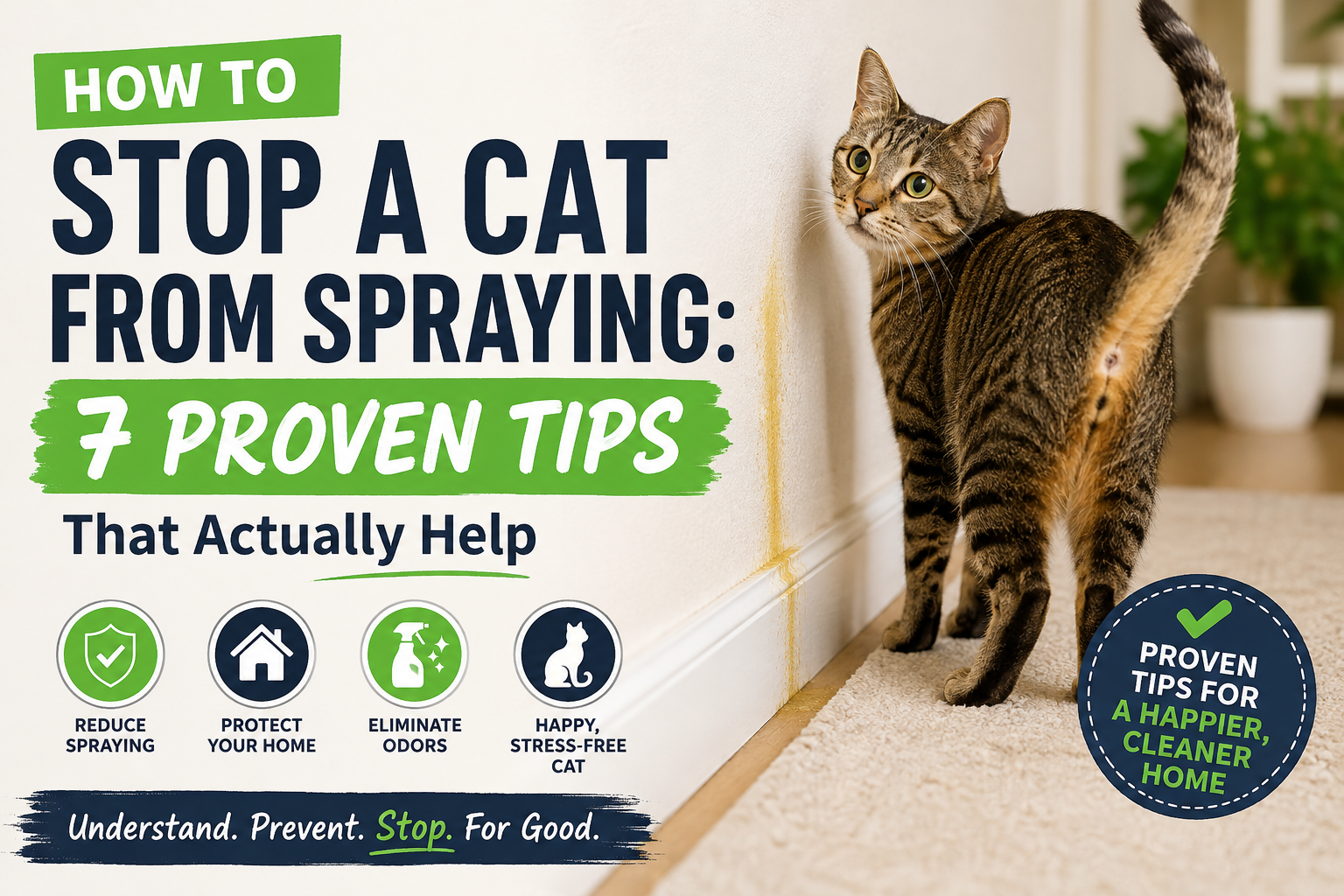
Cat spraying can be frustrating, especially when you’ve cleaned the same area several times only to find your cat marking it again. The smell can linger, furniture and walls can become targets, and you may start wondering what is causing the behavior in the first place.
If you’re searching for How to stop a cat from spraying, the most important thing to understand is that spraying is usually a form of communication. Cats may mark their territory because of stress, conflict with other animals, environmental changes, or reproductive behavior. In some situations, urinary or other medical problems can also cause changes in bathroom habits, so sudden or persistent problems deserve veterinary attention.
The good news is that there are practical steps you can take. Rather than punishing your cat or trying random solutions, focus on identifying the reason for the behavior and making the environment more comfortable.
Here are seven proven approaches that can help you tackle cat spraying and reduce the chances of it becoming a recurring problem.
How to Stop a Cat From Spraying: First Identify the Problem
Before trying to solve spraying, make sure your cat is actually spraying rather than simply urinating outside the litter box.
Spraying typically involves a cat standing upright, backing toward a vertical surface, raising its tail, and releasing a relatively small amount of urine. Common targets include walls, doors, furniture, curtains, and other vertical surfaces.
Regular urination outside the litter box can look different. A cat may squat and leave a larger amount of urine on a horizontal surface such as a carpet, bed, or floor.
The distinction is important because these behaviors can have different causes.
If your cat suddenly changes its bathroom habits, don’t automatically assume the problem is behavioral. Urinary tract problems, bladder conditions, inflammation, pain, kidney disease, and other medical issues can contribute to inappropriate elimination.
If you notice frequent attempts to urinate, straining, signs of pain, blood in the urine, or a sudden dramatic change in bathroom behavior, contact your veterinarian promptly.
Once medical causes have been considered, you can concentrate on environmental and behavioral triggers.
Why Is My Cat Spraying?
One of the first questions owners ask is, Why is my cat spraying?
There isn’t always a single answer. Several different factors can cause or maintain urine marking.
Territorial behavior
Cats communicate through scent. Spraying can tell other cats that a particular area belongs to them.
This can become especially noticeable when there are multiple cats in the household or when neighborhood cats appear outside windows and doors.
Stress
Cats can be sensitive to changes in their surroundings. Moving furniture, renovating a room, introducing another pet, welcoming a new family member, or changing daily routines can create stress.
Even changes that seem insignificant to people may be meaningful to a cat.
Conflict with other cats
Cats living together don’t always share resources comfortably. Competition over food, water, litter boxes, resting places, or attention can contribute to tension.
Reproductive behavior
Intact cats may be more likely to engage in urine marking. Spaying or neutering can reduce reproductive marking, although sterilized cats can still spray for territorial or stress-related reasons.
Understanding the trigger is one of the most important parts of learning How to stop a cat from spraying successfully.
7 Tips for How to Stop a Cat From Spraying
1. Rule Out Medical Problems First
The first step in How to stop a cat from spraying should be checking whether a health problem could be contributing to the behavior.
Cats sometimes change their urination habits when they are experiencing pain or discomfort. A cat with a urinary problem may begin avoiding its normal litter box or showing unusual bathroom behavior.
If spraying or inappropriate urination starts suddenly, arrange a veterinary examination.
Your veterinarian may perform a physical examination and, depending on the situation, recommend urine testing or other diagnostic procedures.
This step is important because treating a behavior problem won’t solve an underlying medical condition.
Pay particular attention to sudden changes. If your cat previously used the litter box normally and begins repeatedly urinating or marking around the house, don’t simply assume it is being stubborn.
Getting professional advice early can prevent a potentially manageable problem from becoming more complicated.
2. Identify What Is Triggering the Spraying
If you’re trying to figure out How to stop cat spraying, start paying attention to patterns.
Keep a simple record of:
- Where your cat sprays
- When the spraying occurs
- How frequently it happens
- What happens immediately beforehand
- Whether another cat is nearby
- Whether anything recently changed in your home
- Whether your cat can see animals outside
For example, if your cat repeatedly sprays near a window, look for a possible territorial trigger outside.
If the behavior began after adopting another pet, conflict or competition could be involved.
If spraying started after moving homes or changing your daily schedule, stress may be playing a role.
Finding the trigger gives you something specific to address instead of treating every spraying incident as an isolated event.
3. Clean Previously Sprayed Areas Thoroughly
Cats have an excellent sense of smell, and leftover urine odor can make a previously marked location attractive for repeat marking.
If you’re wondering How to stop cat spraying indoors, thorough cleaning should be part of your strategy.
Use an enzymatic cleaner specifically designed for pet urine. These products are intended to break down odor-causing components rather than simply covering the smell with fragrance.
Avoid relying on ordinary household cleaners or products containing ammonia. Strong scents may not remove the underlying odor, and ammonia can resemble compounds found in urine.
When cleaning a marked area:
- Absorb fresh urine as soon as possible.
- Apply an appropriate enzymatic pet-urine cleaner.
- Follow the product’s instructions carefully.
- Give it the recommended amount of contact time.
- Allow the area to dry completely.
Don’t overlook hidden areas behind furniture or near doors and windows.
Cleaning won’t necessarily solve the underlying reason your cat is spraying, but eliminating residual odor can help reduce the temptation to repeatedly mark the same location.
4. Improve the Litter-Box Setup
A comfortable litter-box environment can make a significant difference when dealing with elimination problems.
For households with multiple cats, a commonly recommended approach is to provide one litter box per cat plus one additional box.
For example, a home with two cats could have three litter boxes.
The boxes should be positioned in accessible locations where cats can use them without feeling trapped or threatened by another animal.
Consider:
- Keeping boxes clean
- Providing easy access
- Avoiding extremely noisy locations
- Choosing an appropriate box size
- Giving cats privacy
- Placing boxes in separate areas when possible
If one cat can block another cat’s access to a litter box, household tension can increase.
This is particularly important when you’re learning How to stop a cat from spraying because improving the litter-box environment addresses one of the fundamental areas of feline elimination behavior.
5. Reduce Stress and Territorial Triggers
Stress can play an important role in Cat spraying, so look carefully at your cat’s environment.
Think about what has changed recently.
Did you:
- Move to a new home?
- Rearrange furniture?
- Introduce another pet?
- Change your work schedule?
- Have construction work done?
- Notice unfamiliar cats outside?
- Change feeding or sleeping routines?
If outdoor cats appear to be triggering your cat, reducing visual access may help. Closing blinds, adjusting curtains, or preventing access to particular windows can reduce encounters with outside animals.
Inside the home, provide places where your cat can retreat when it wants privacy.
Elevated resting areas, hiding spots, scratching surfaces, toys, and predictable routines can help create a more comfortable environment.
If you have multiple cats, make sure they have sufficient access to important resources such as food, water, litter boxes, resting areas, and vertical space.
The goal is not simply to stop the visible behavior. It’s to reduce whatever is making your cat feel the need to mark.
6. Consider Spaying or Neutering
If your cat has not been spayed or neutered, speak with your veterinarian about whether the procedure is appropriate.
Hormonal and reproductive behavior can contribute to urine marking, particularly in intact males. Spaying or neutering can reduce this type of marking.
However, it isn’t a guaranteed solution for every spraying problem.
A neutered male or spayed female may continue spraying because of stress, territorial issues, conflict with other cats, or environmental changes.
So if your cat has already been sterilized and continues marking, don’t assume there is nothing you can do.
Instead, investigate the environmental and behavioral factors that may be maintaining the behavior.
7. Never Punish Your Cat for Spraying
When you discover another sprayed area, frustration is understandable.
However, yelling at your cat, hitting it, chasing it, or using frightening punishment can increase stress and fear.
That can potentially make the underlying problem worse.
Instead of punishing the behavior, focus on identifying its cause.
If you catch your cat preparing to mark, calmly redirecting its attention toward an appropriate activity may be more useful than frightening it.
Remember that your cat isn’t spraying because it wants to annoy you.
From the cat’s perspective, marking is communication.
The more effectively you understand that communication, the easier it becomes to address the underlying problem.
What If Your Cat Keeps Spraying?
Sometimes basic changes aren’t enough.
If you’ve ruled out medical problems, cleaned marked areas, improved litter-box conditions, reduced obvious stressors, and your cat continues spraying, consider seeking professional help.
Your veterinarian can help determine whether additional medical investigation is appropriate and may also recommend a qualified feline behavior professional.
Some cats benefit from a structured behavior-management plan that addresses multiple triggers at the same time.
There are also educational programs specifically focused on feline spraying and urine-marking behavior.
For example, CatSprayStop is marketed as a digital guide designed to help cat owners understand and address spraying behavior. If you’re considering a paid program, evaluate its claims carefully and treat it as an educational resource rather than a replacement for veterinary care.
The right approach depends on the individual cat and the reason behind the behavior.
How to Prevent Cat Spraying From Coming Back
Once the behavior improves, don’t immediately abandon the changes that helped.
Continue maintaining a comfortable environment and watch for potential triggers.
Keep litter boxes clean and accessible. Maintain predictable routines. Thoroughly clean previous marking areas. Watch for conflict between cats and reduce exposure to stressful territorial encounters when possible.
Also pay attention to sudden changes in bathroom habits.
If your cat starts spraying again after a period of improvement, look for what changed around the same time.
A new pet, household visitor, furniture change, outdoor cat, or disruption in routine may provide an important clue.
Frequently Asked Questions About Cat Spraying
How do I stop my cat from spraying in the house?
Start by determining whether the behavior is urine marking or another elimination problem. Rule out medical causes, identify potential triggers, clean marked areas thoroughly, improve litter-box conditions, and reduce stress. Persistent problems should be discussed with a veterinarian.
Can neutered cats still spray?
Yes. Neutered males and spayed females can still spray. Sterilization may reduce reproductive marking, but territorial behavior, stress, and environmental triggers can still cause urine marking.
Why does my cat spray near windows?
Another cat outside may be acting as a territorial trigger. If your cat repeatedly sprays near windows or doors, reducing its ability to see or interact with outside cats may help.
Does cleaning cat spray prevent repeat marking?
Thorough cleaning can help remove lingering urine odor that may encourage a cat to return to the same location. An enzymatic pet-urine cleaner is generally preferable to simply masking the smell.
Should I punish my cat for spraying?
No. Punishment can increase fear and stress. A better approach is to identify the underlying trigger and change the environment or behavior-management strategy accordingly.
When should I contact a veterinarian?
Contact your veterinarian if spraying begins suddenly, continues despite environmental changes, or occurs alongside other unusual urinary symptoms. Medical conditions should be ruled out before assuming the problem is purely behavioral.
Final Thoughts
Learning How to stop a cat from spraying isn’t usually about discovering one magical trick.
The most useful approach is to understand why the behavior is happening and address the underlying cause.
Start by ruling out medical problems. Then investigate territorial triggers, stress, household conflict, litter-box conditions, and environmental changes. Clean previously marked areas thoroughly and avoid punishment.
Most importantly, be patient.
Your cat is communicating through its behavior. Once you understand what may be triggering that behavior, you can take practical steps toward creating a calmer and more comfortable environment.
If you’re still struggling with persistent Cat spraying, consider speaking with your veterinarian or a qualified feline behavior professional. A structured approach can help you determine what is happening and what to try next.