Table of Contents
Introduction to Pet Wellness and Daily Care
Pet wellness is a holistic commitment to helping animals live healthier, calmer, and more fulfilling lives. It goes far beyond simply providing food and shelter. True wellness includes physical health, emotional balance, mental stimulation, hygiene, and a secure environment.
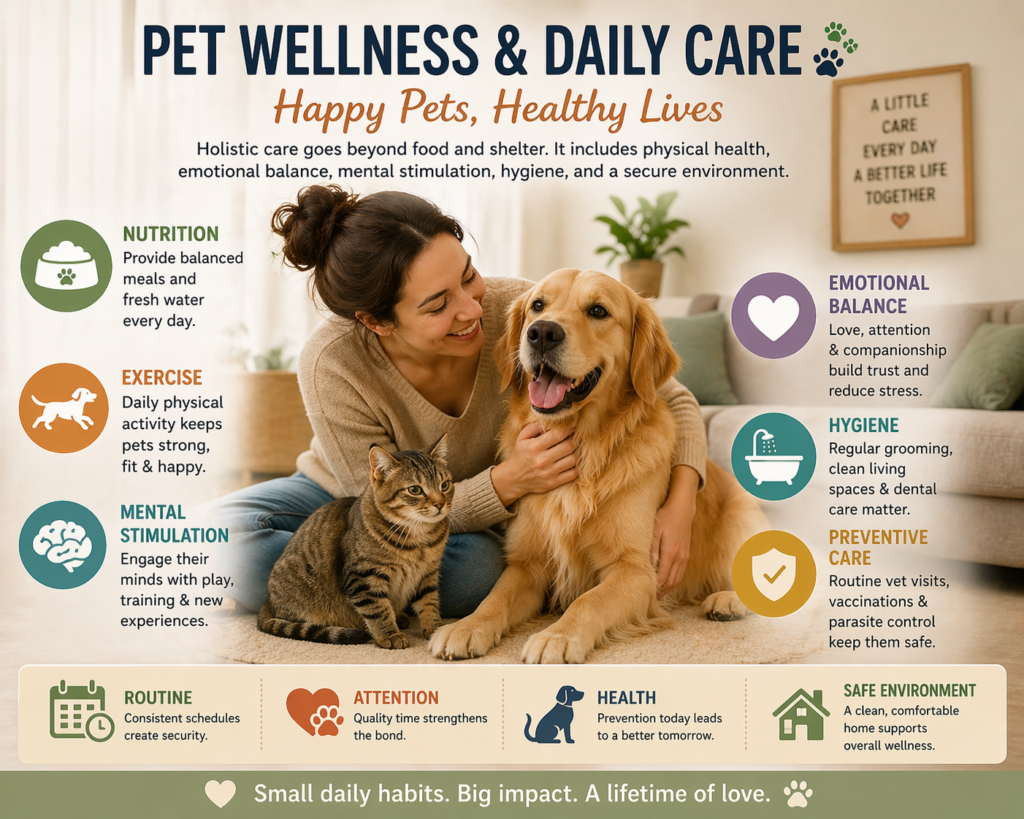
Many owners focus only on visible needs. However, pets also need routine, attention, exercise, and preventive healthcare. When these essentials are combined, pets often become more energetic, affectionate, and emotionally stable.
Daily care does not need to be complicated. Small consistent habits usually produce better long-term results than occasional bursts of effort.
Why Pet Wellness Matters More Than Ever
Pets today are cherished family members. Because of improved veterinary medicine and better nutrition, many dogs and cats now live significantly longer than previous generations.
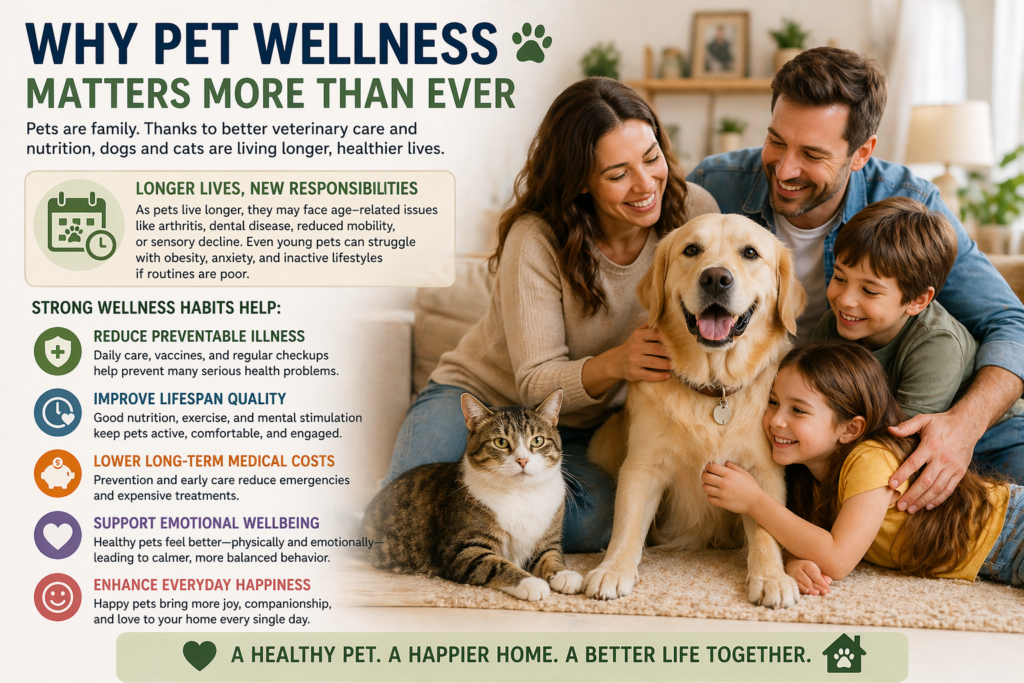
Longer lifespans create new responsibilities. Senior pets may develop arthritis, dental disease, reduced mobility, or sensory decline. Younger pets can also suffer from obesity, anxiety, and sedentary lifestyles if routines are poor.
Strong wellness habits help:
- Reduce preventable illness
- Improve lifespan quality
- Lower long-term medical costs
- Support emotional wellbeing
- Enhance everyday happiness
A healthy pet often means a happier household.
Understanding Your Pet’s Physical Needs
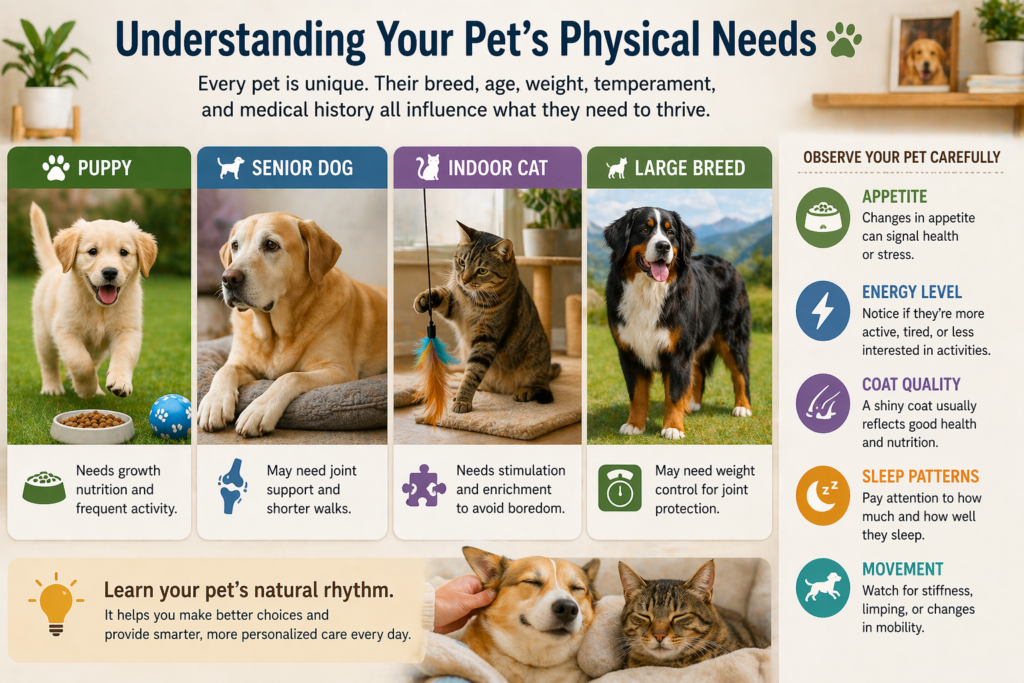
Every animal is different. A one-size-fits-all approach rarely works. Breed, age, weight, temperament, and medical history all influence what a pet needs.
For example:
- A puppy needs growth nutrition and frequent activity
- A senior dog may need joint support and shorter walks
- Indoor cats need stimulation to avoid boredom
- Large breeds may need weight control for joint protection
Observe your pet carefully. Appetite, energy level, coat quality, sleep patterns, and movement all reveal valuable information.
Learning your pet’s natural rhythm helps you provide smarter daily care.
Creating a Balanced Nutrition Routine
Nutrition is the cornerstone of wellness. Food affects energy, digestion, immunity, skin condition, and longevity.
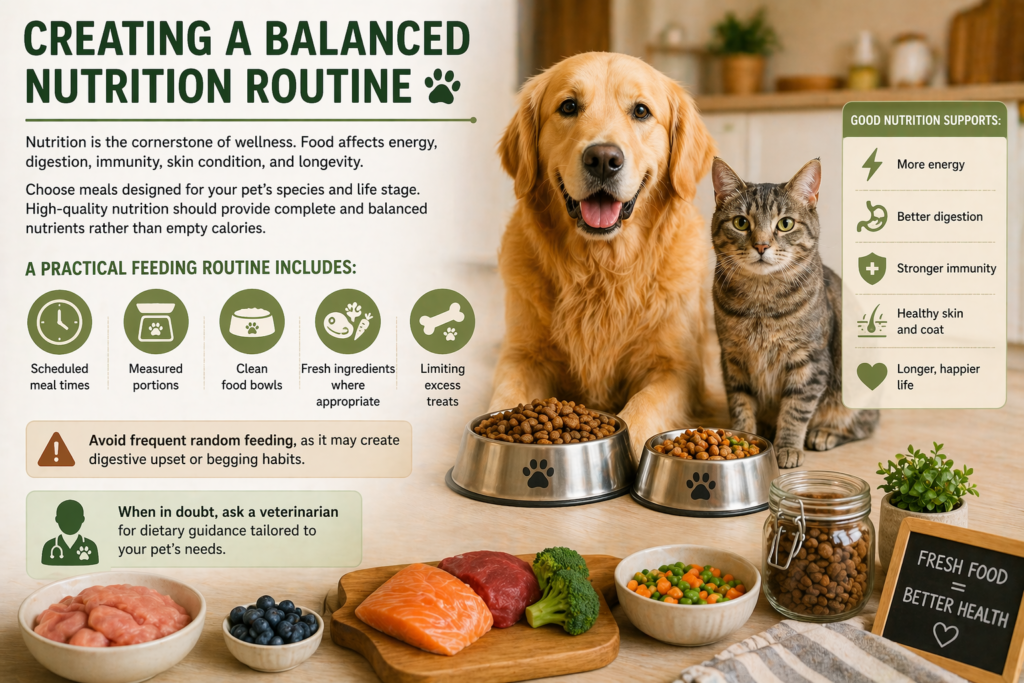
Choose meals designed for your pet’s species and life stage. High-quality nutrition should provide complete and balanced nutrients rather than empty calories.
A practical feeding routine includes:
- Scheduled meal times
- Measured portions
- Clean food bowls
- Fresh ingredients where appropriate
- Limiting excess treats
Avoid frequent random feeding, as it may create digestive upset or begging habits.
When in doubt, ask a veterinarian for dietary guidance tailored to your pet’s needs.
Support Better Feeding Habits With These Essentials – See Top Picks
The Importance of Fresh Water and Hydration
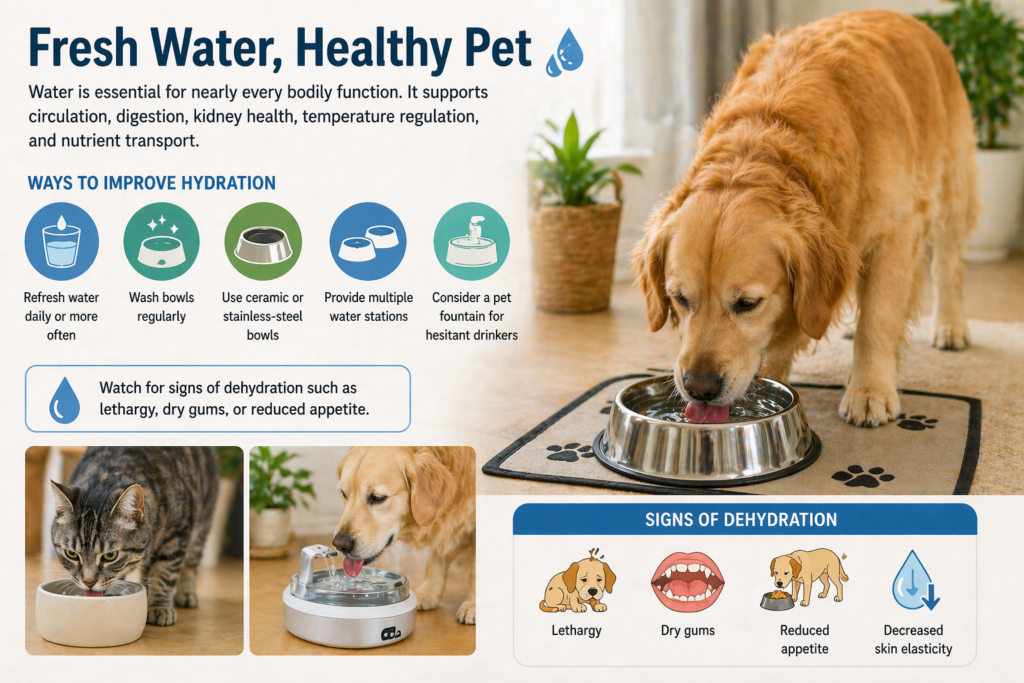
Water is essential for nearly every bodily function. It supports circulation, digestion, kidney health, temperature regulation, and nutrient transport.
Many owners underestimate hydration. Pets may drink less if bowls are dirty, hard to reach, or placed in stressful locations.
Ways to improve hydration:
- Refresh water daily or more often
- Wash bowls regularly
- Use ceramic or stainless-steel bowls
- Provide multiple water stations
- Consider a pet fountain for hesitant drinkers
Watch for signs of dehydration such as lethargy, dry gums, or reduced appetite.
Consistent hydration is one of the simplest wellness upgrades.
Encourage Better Hydration – See Top Picks
Portion Control and Healthy Weight Management
Extra weight can silently damage a pet’s health. Obesity increases the risk of diabetes, joint strain, breathing issues, and reduced lifespan.
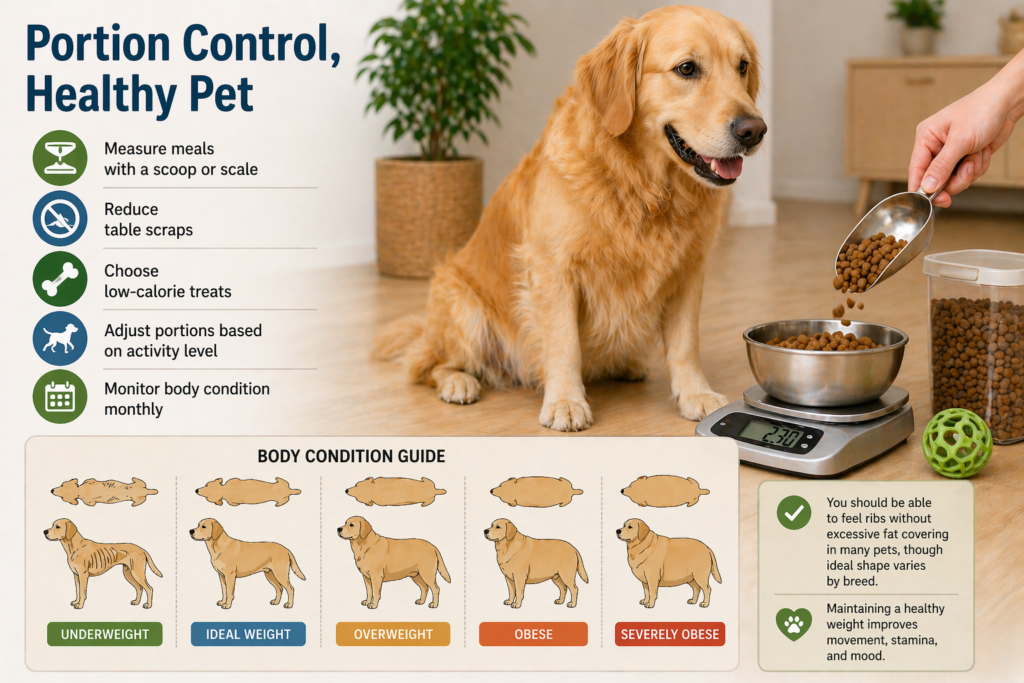
Portion control matters just as much as food quality.
Helpful strategies:
- Measure meals with a scoop or scale
- Reduce table scraps
- Choose low-calorie treats
- Adjust portions based on activity level
- Monitor body condition monthly
You should be able to feel ribs without excessive fat covering in many pets, though ideal shape varies by breed.
Maintaining a healthy weight often improves movement, stamina, and mood.
Daily Exercise for Dogs and Cats
Movement is vital for physical and emotional health. Pets that exercise regularly often display better behavior and stronger body condition.

Dogs may benefit from:
- Walks
- Fetch sessions
- Hiking
- Swimming
- Obedience drills
Cats may enjoy:
- Feather toys
- Laser alternatives used responsibly
- Climbing trees
- Puzzle toys
- Chasing games
Exercise helps with:
- Weight management
- Joint flexibility
- Better sleep
- Stress reduction
- Reduced destructive habits
Even brief but consistent sessions can create remarkable change.
Mental Stimulation and Enrichment Activities
A bored pet may chew furniture, overeat, vocalize excessively, or become withdrawn. Mental enrichment is often overlooked but highly valuable.
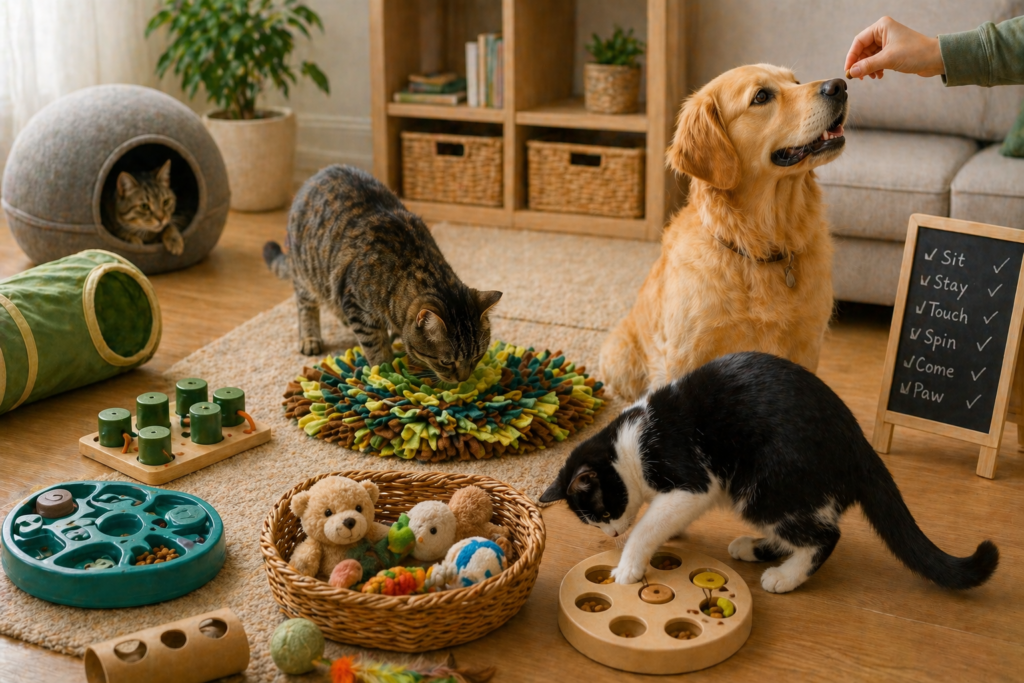
Try rotating activities such as:
- Puzzle feeders
- Snuffle mats
- Scent trails
- Hide-and-seek games
- New toy rotation
- Training new commands
Mental work can tire pets in a healthy way, often faster than physical activity alone.
Curiosity should be nurtured. A stimulated pet is frequently calmer, happier, and more adaptable.
Grooming Habits for Long-Term Comfort
Grooming keeps pets comfortable and allows early detection of issues like skin irritation, lumps, parasites, or infections.
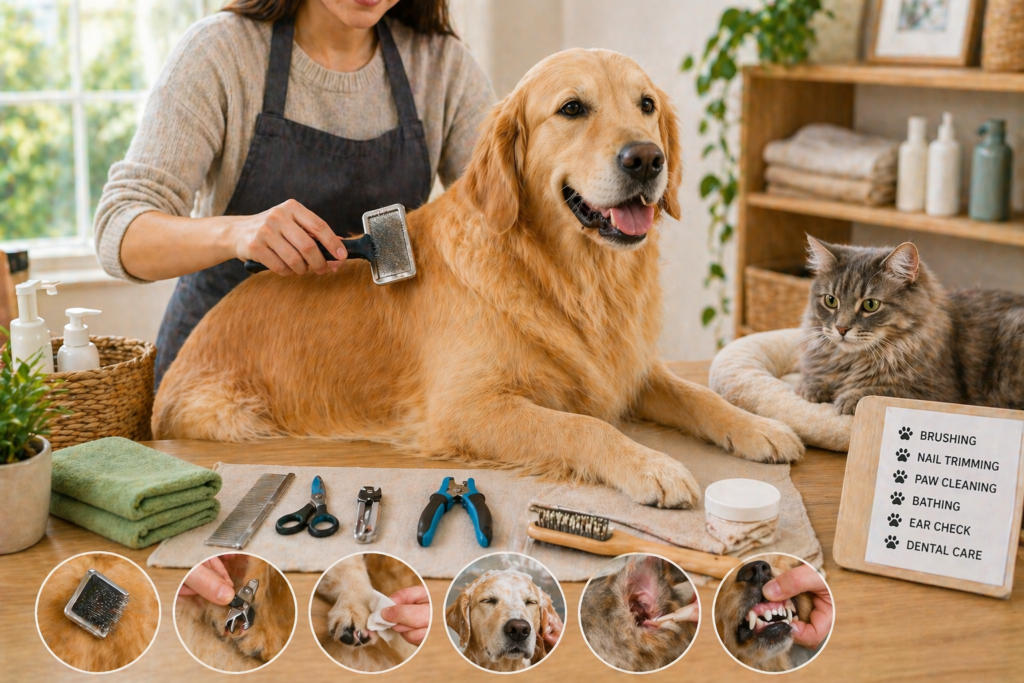
Routine grooming may include:
- Brushing loose fur
- Trimming nails
- Cleaning paws
- Bathing when needed
- Ear inspections
- Checking teeth and gums
Long-haired breeds need extra brushing to prevent mats, which can become painful.
Use gentle tools suited to coat type. Reward calm behavior during grooming sessions to build trust and cooperation.
Keep Your Pet Clean, Healthy & Comfortable – See Top Picks
Preventive Veterinary Care and Checkups
Waiting until a pet is visibly sick can allow problems to worsen. Preventive care is one of the most responsible wellness practices.
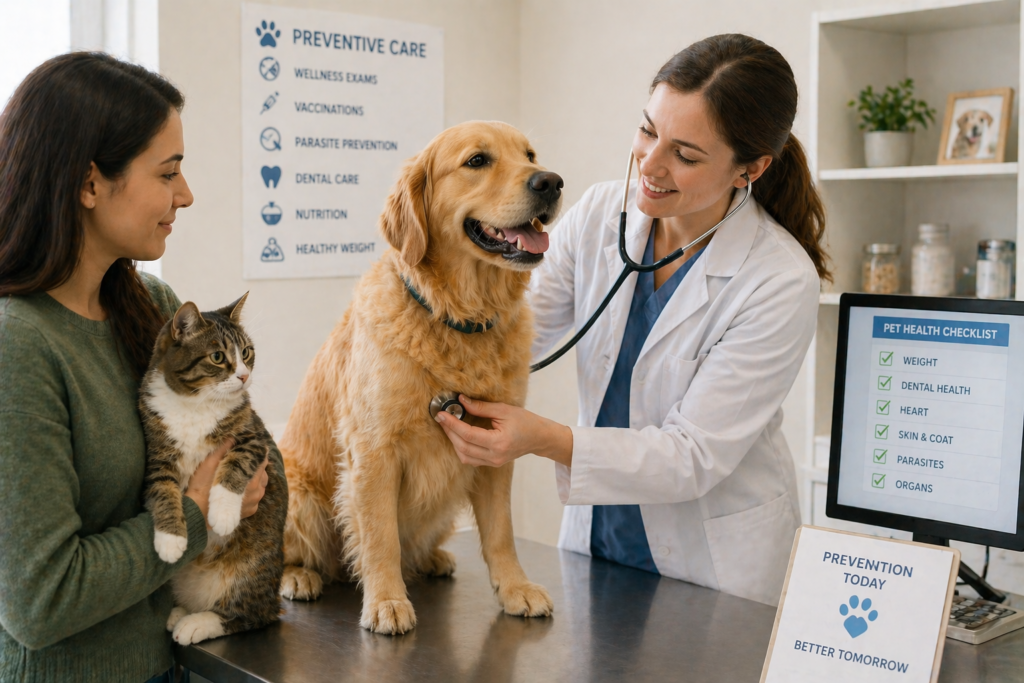
Routine checkups may identify:
- Weight changes
- Dental disease
- Heart concerns
- Skin problems
- Parasites
- Early organ issues
Depending on age and health, some pets benefit from annual exams while others need more frequent visits.
Preventive medicine can save discomfort, time, and financial strain later.
Vaccinations, Parasite Protection, and Safety
Vaccinations help shield pets from dangerous infectious diseases. Parasite control protects against fleas, ticks, heartworms, mites, and intestinal worms.
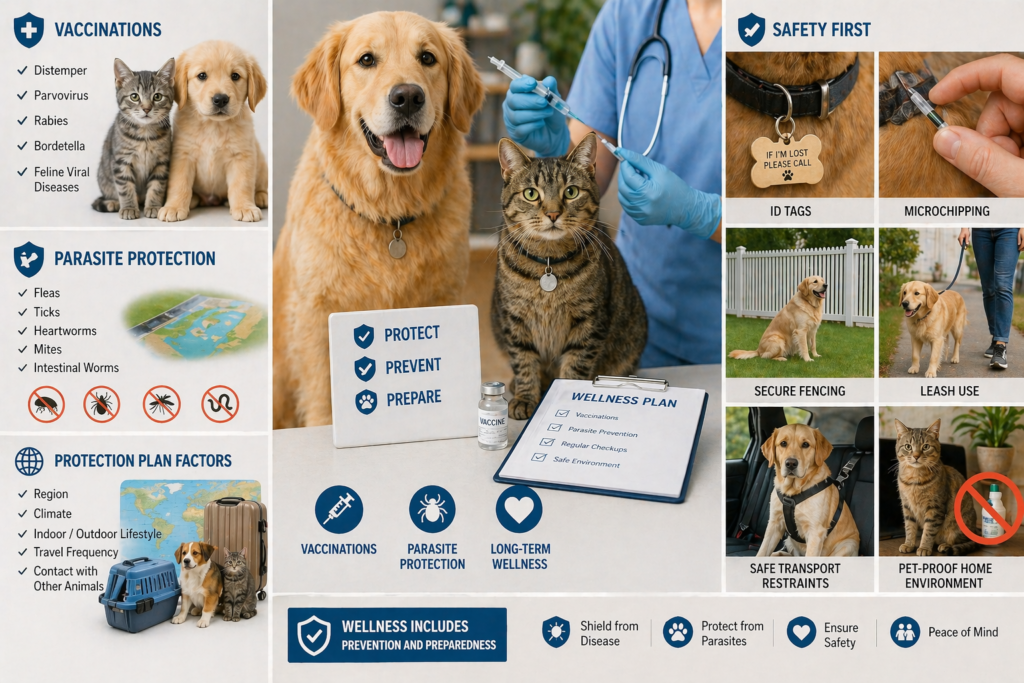
Protection plans depend on:
- Region
- Climate
- Indoor or outdoor lifestyle
- Travel frequency
- Contact with other animals
Also focus on safety through:
- ID tags
- Microchipping
- Secure fencing
- Leash use
- Safe transport restraints
Wellness includes prevention and preparedness.
Dental Care for Better Overall Health
Oral health affects the entire body. Dental disease may contribute to pain, appetite issues, and bacterial spread.
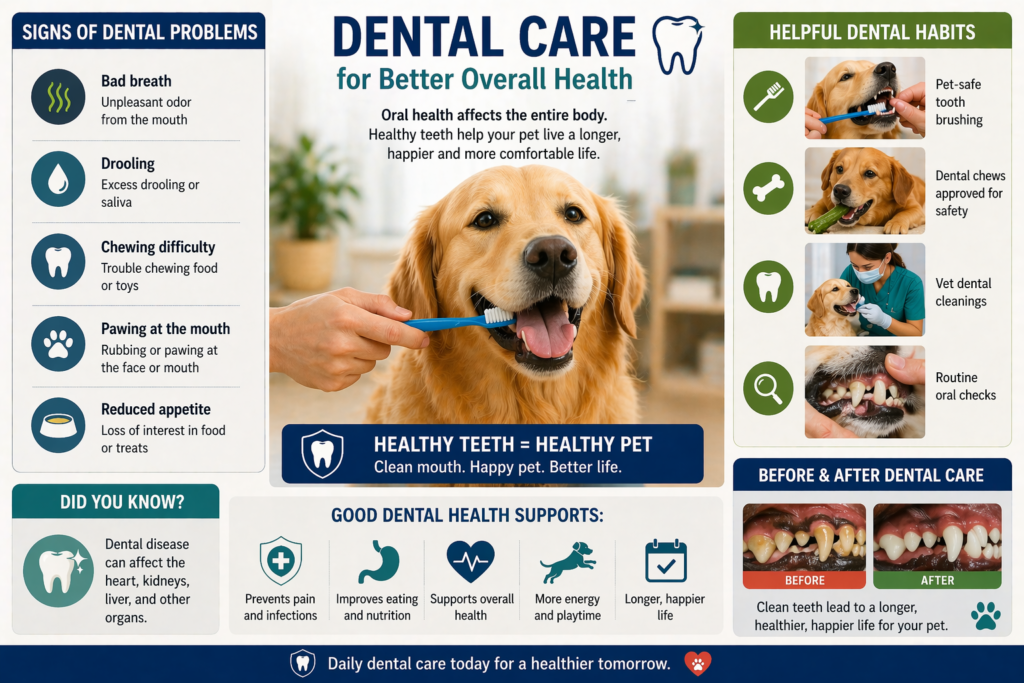
Many pets hide discomfort well. Signs can include:
- Bad breath
- Drooling
- Chewing difficulty
- Pawing at the mouth
- Reduced appetite
Helpful dental habits:
- Pet-safe tooth brushing
- Dental chews approved for safety
- Vet dental cleanings
- Routine oral checks
Healthy teeth often mean a more comfortable and energetic pet.
Emotional Wellness and Stress Reduction
Pets need emotional security as much as physical care. Chronic stress can affect digestion, behavior, sleep, and immunity.
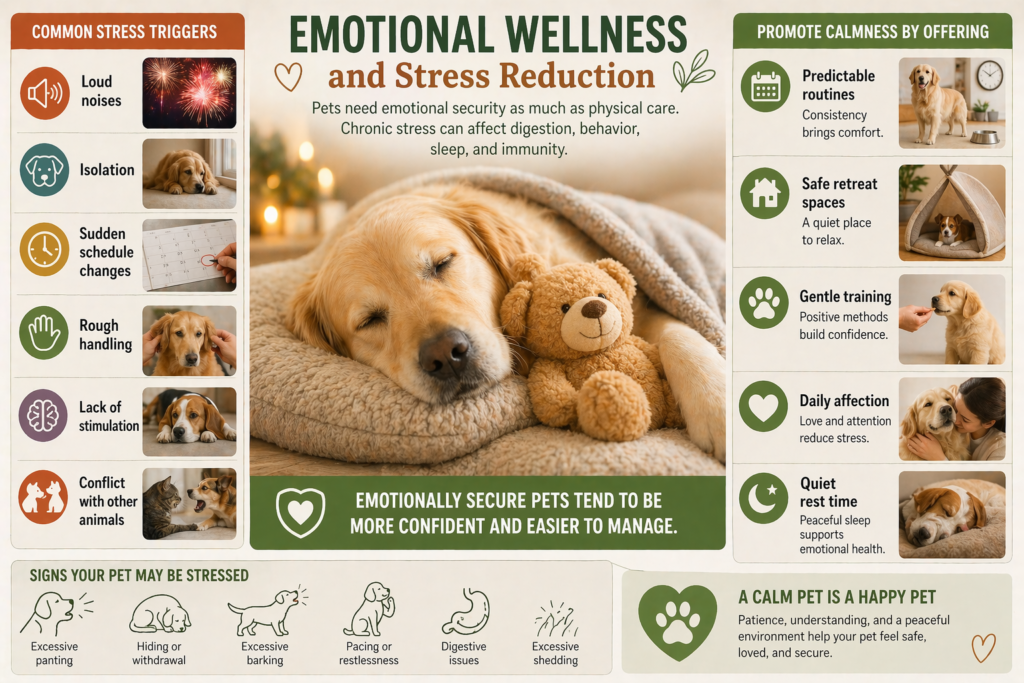
Common stress triggers include:
- Loud noises
- Isolation
- Sudden schedule changes
- Rough handling
- Lack of stimulation
- Conflict with other animals
Promote calmness by offering:
- Predictable routines
- Safe retreat spaces
- Gentle training
- Daily affection
- Quiet rest time
Emotionally secure pets tend to be more confident and easier to manage.
Help Your Pet Feel Safe & Relaxed – See Top Picks
Building Consistent Routines at Home
Routine gives pets a sense of order. Animals often feel safer when they know when meals, walks, play, and rest will happen.
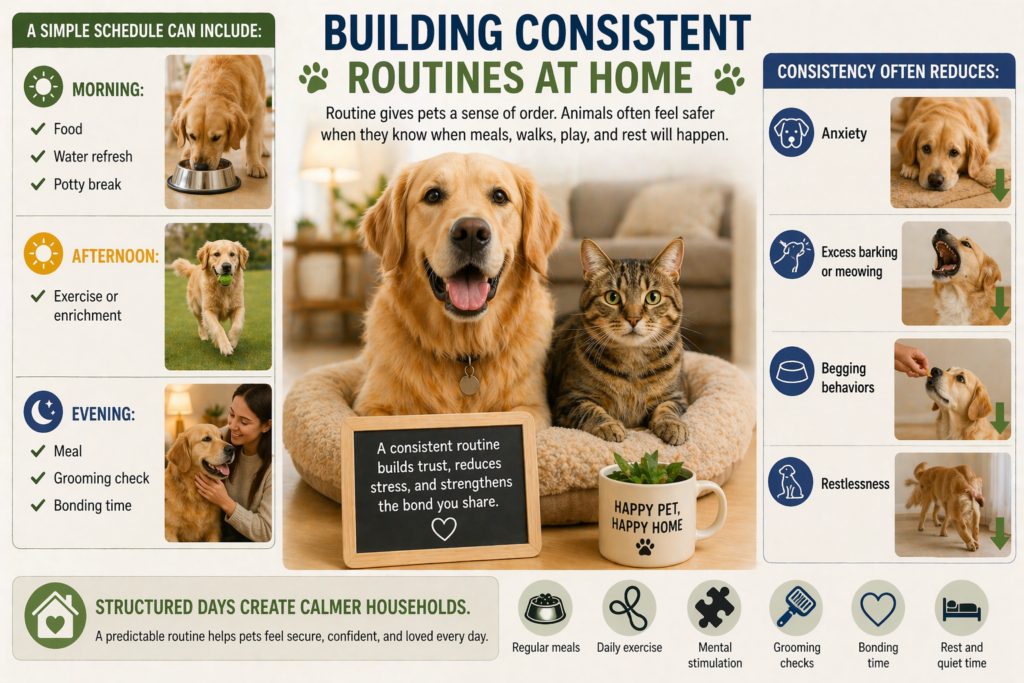
A simple schedule can include:
Morning: food, water refresh, potty break
Afternoon: exercise or enrichment
Evening: meal, grooming check, bonding time
Consistency often reduces:
- Anxiety
- Excess barking or meowing
- Begging behaviors
- Restlessness
Structured days create calmer households.
Creating a Clean and Safe Living Space
The home environment strongly influences health. Dirty bowls, cluttered floors, and unsafe objects can cause preventable issues.
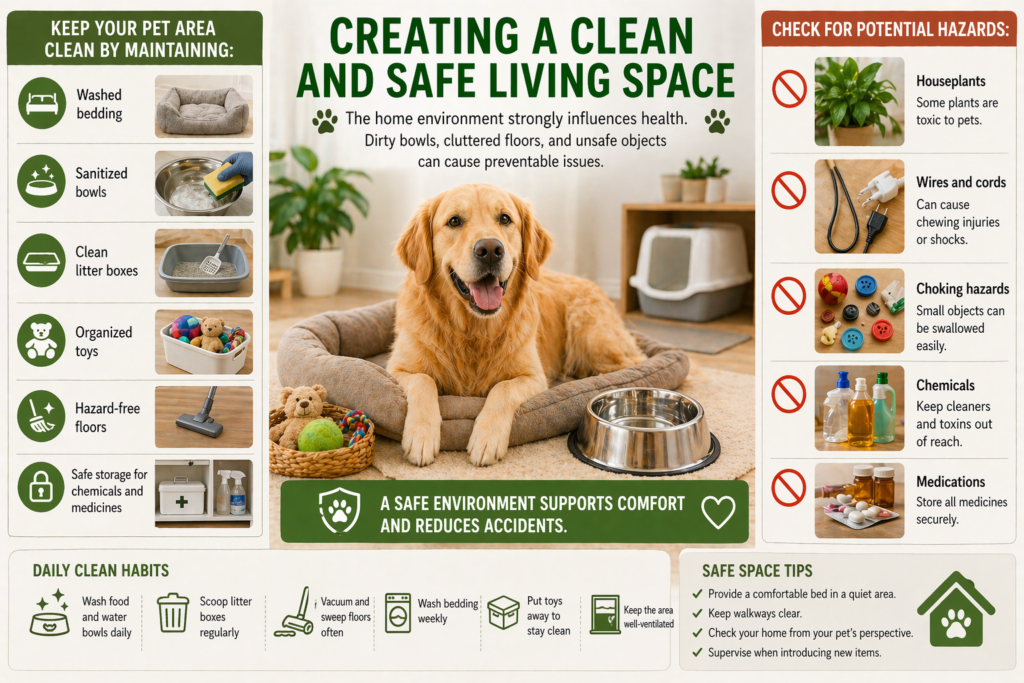
Keep your pet area clean by maintaining:
- Washed bedding
- Sanitized bowls
- Clean litter boxes
- Organized toys
- Hazard-free floors
- Safe storage for chemicals and medicines
Also check houseplants, wires, and choking hazards.
A safe environment supports comfort and reduces accidents.
Recognizing Early Warning Signs of Illness
Pets often hide discomfort instinctively. Small changes may be the earliest clues something is wrong.
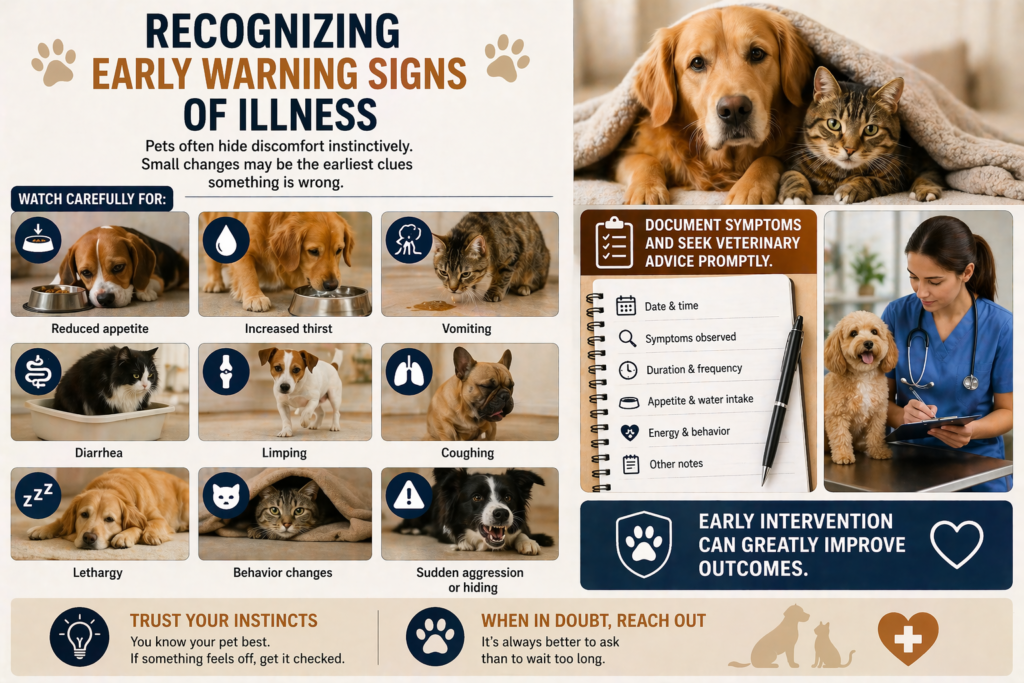
Watch carefully for:
- Reduced appetite
- Increased thirst
- Vomiting
- Diarrhea
- Limping
- Coughing
- Lethargy
- Behavior changes
- Sudden aggression or hiding
Document symptoms and seek veterinary advice promptly.
Early intervention can greatly improve outcomes.
Strengthening the Bond Between Pet and Owner
A strong bond improves trust, cooperation, and emotional wellbeing. Pets that feel secure with their owner are often more relaxed and responsive.

Ways to deepen connection:
- Daily cuddles or gentle touch
- Positive training sessions
- Shared walks or play
- Calm communication
- Respecting rest time
- Rewarding good behavior
Relationships are built in small moments repeated consistently.
Trust creates confidence.
Common Pet Wellness Mistakes to Avoid
Even loving owners can develop habits that undermine health.
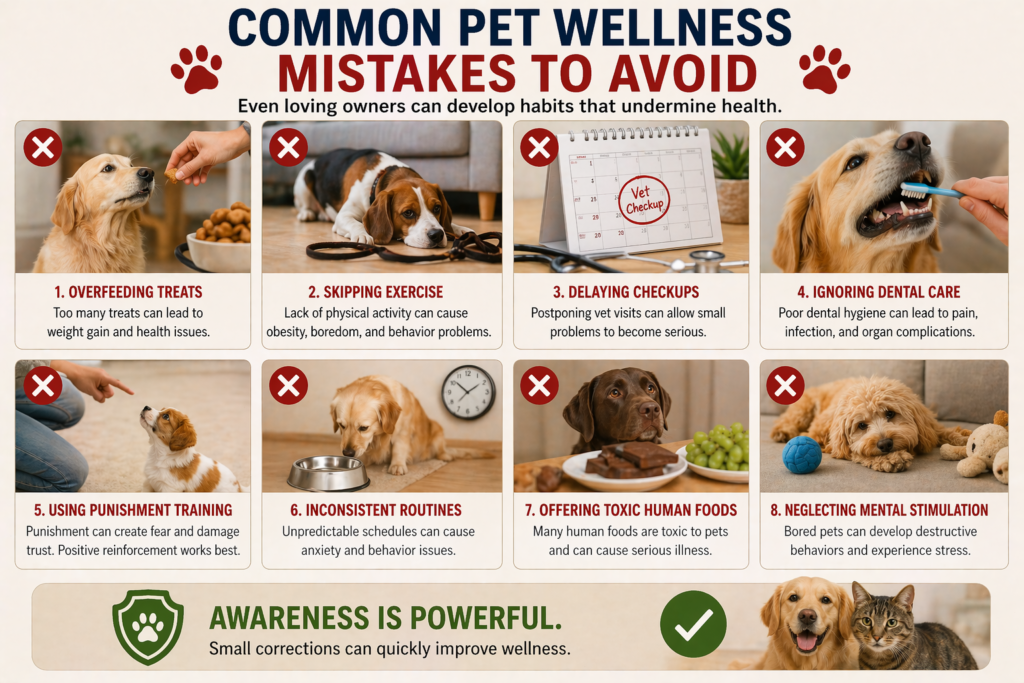
Common mistakes include:
- Overfeeding treats
- Skipping exercise
- Delaying checkups
- Ignoring dental care
- Using punishment training
- Inconsistent routines
- Offering toxic human foods
- Neglecting mental stimulation
Awareness is powerful. Small corrections can quickly improve wellness.
Easy Daily Pet Care Checklist
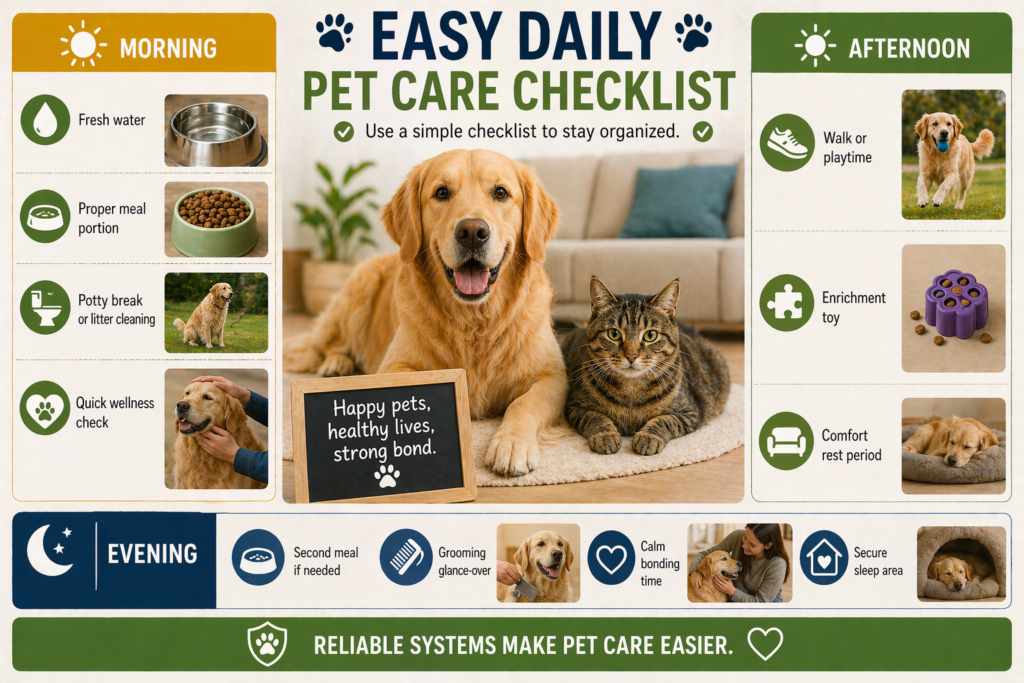
Use a simple checklist to stay organized.
Morning
- Fresh water
- Proper meal portion
- Potty break or litter cleaning
- Quick wellness check
Afternoon
- Walk or playtime
- Enrichment toy
- Comfort rest period
Evening
- Second meal if needed
- Grooming glance-over
- Calm bonding time
- Secure sleep area
Reliable systems make pet care easier.
Final Thoughts on Lifelong Pet Wellness
Healthy pets are rarely created through dramatic actions. They thrive through thoughtful routines repeated day after day.
Feed wisely. Move regularly. Observe closely. Groom gently. Love generously. Seek preventive care before problems grow.
These pet wellness tips can help owners create longer, safer, and happier lives for their animals. The daily effort may seem small, yet its cumulative effect is profound.
A cared-for pet often returns that care with loyalty, joy, and unwavering companionship.